Whose Fault Is It? The Missing Pallet Problem — and Why "Proof of Load" Changes Everything

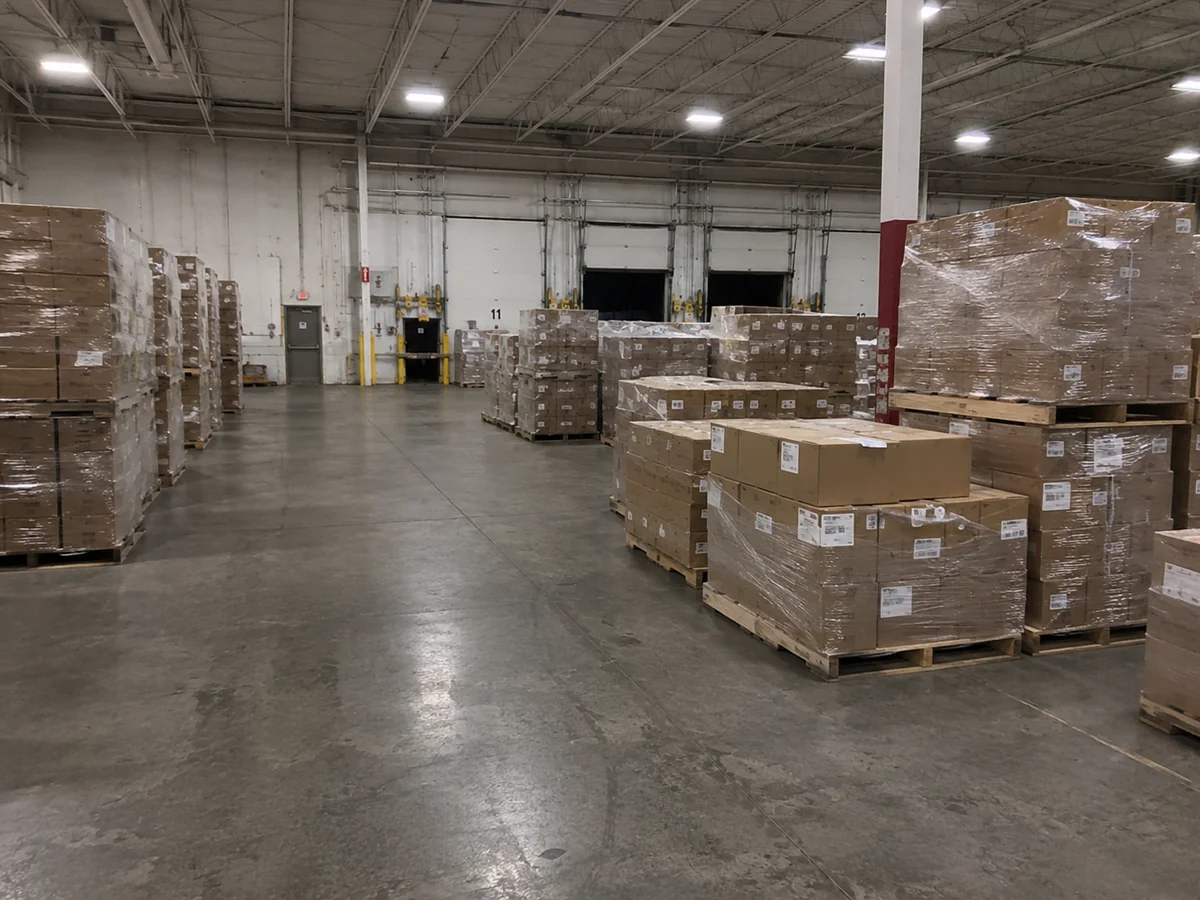
It's a situation every warehouse has faced:
A FedEx, UPS, or LTL carrier arrives, your team loads the freight, the driver signs, and the truck pulls away.
Then hours — or days — later:
"You didn't load one of the pallets."
Now you're stuck in the middle. Your customer wants answers. The carrier is pushing back. And suddenly, it's your problem to prove what happened.
Welcome to the world of Proof of Load.
The Truth: It's Not About Fault — It's About Proof
In logistics, fault is rarely decided by memory or good intentions.
It comes down to one thing: what can you prove?
Carriers move thousands of shipments daily. If something is missing at delivery, their default stance is simple:
- It wasn't loaded
- Or it wasn't documented properly
If you don't have clear, organized proof, the responsibility often lands back on you.
What Is "Proof of Load"?
Proof of Load (POL) is your documented evidence that freight was:
- Present
- Accounted for
- Physically loaded onto the trailer
A strong POL includes:
- Photos of the shipment before and during loading
- Visible labels and pallet counts
- A signed Bill of Lading (BOL)
- Time-stamped documentation
Without it, you're relying on word-of-mouth in a process that demands hard evidence.
Where Most Operations Fall Short
Even well-run warehouses run into trouble because:
- Photos are scattered across phones
- Documentation lives in email threads
- Nobody can find the right image when it matters
- There's no consistent process for capturing proof
So when a dispute happens, the scramble begins.
How Do You Provide Proof of Load?
To resolve disputes quickly, you need structured, accessible evidence — not just random photos.
Step 1: Capture the Right Evidence
- Pallets staged on the dock
- Labels clearly visible
- Pallets being loaded
- Inside the trailer once complete
Step 2: Tag Everything
Every shipment should be tied to:
- A reference number
- Customer name
- Date and time
Step 3: Store It Centrally
If your proof lives on someone's phone, you don't really have proof.
A Better Way: Using DockSnap
This is where tools like DockSnap change the game.
Instead of chasing down photos or digging through inboxes, everything is captured, organized, and ready the moment you need it.
Everything in One Place
Photos upload automatically to a secure, centralized library — organized by date and reference.
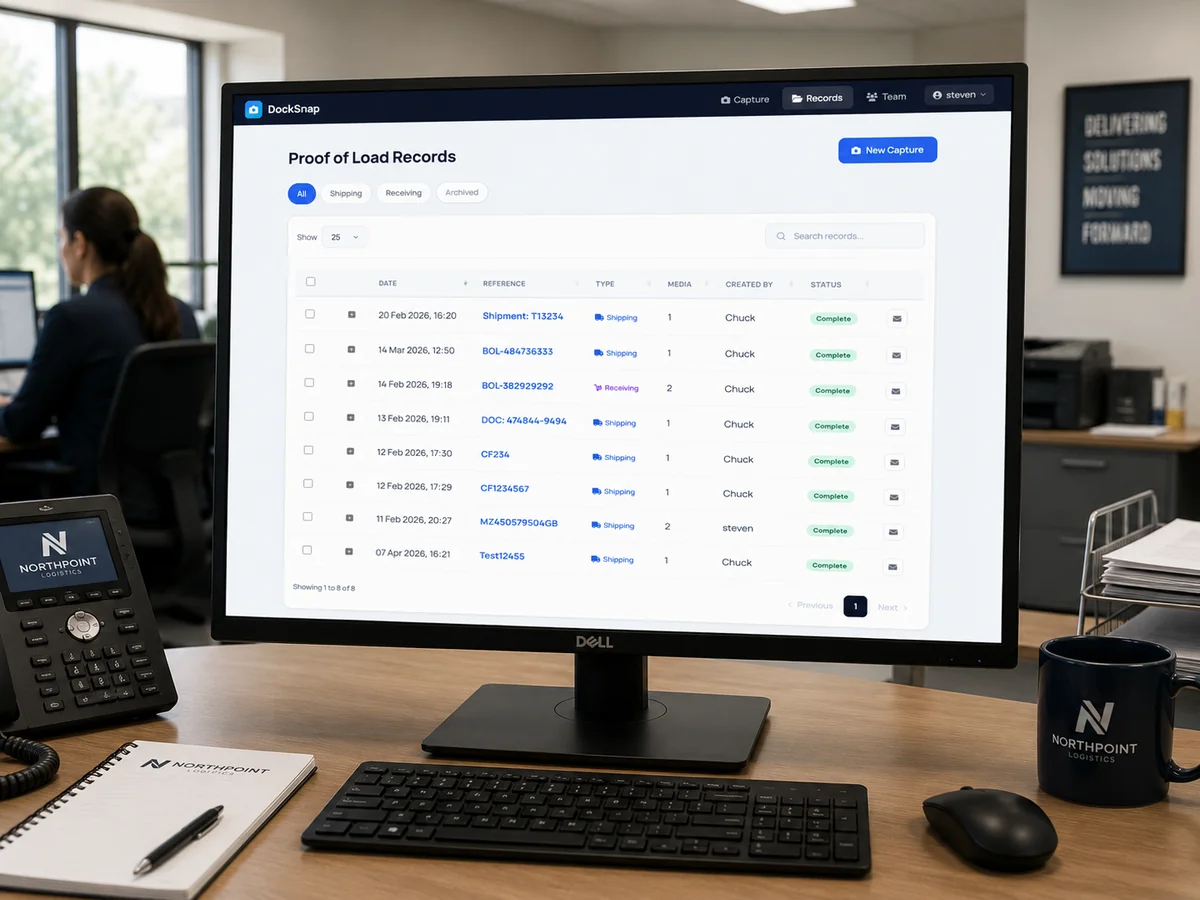
No more:
- Texting employees for pictures
- Searching email threads
- Guessing which photos belong to which shipment
How DockSnap Works in Real Life
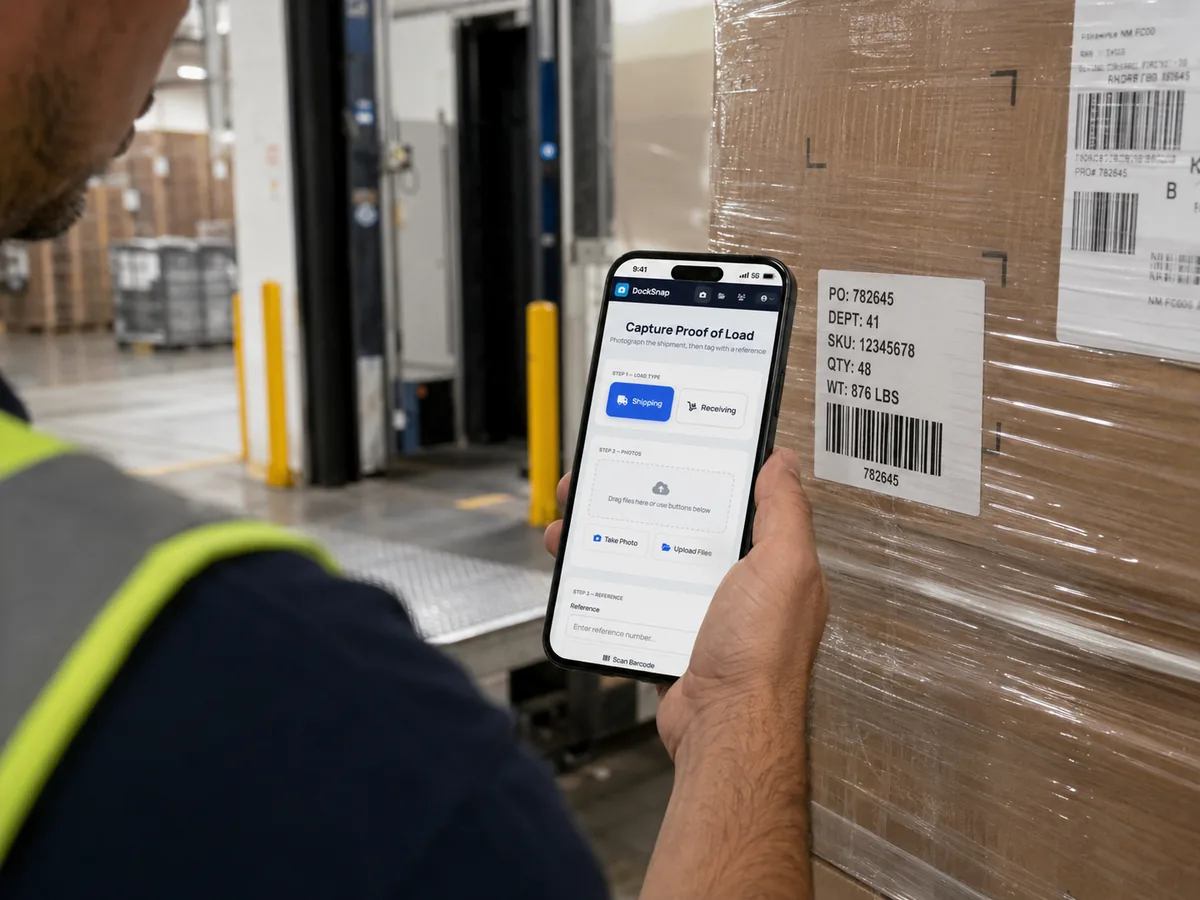
1. Ship or Receive
Tap one button to start. If your warehouse only ships (or only receives), it can default automatically — keeping your process simple and consistent.
2. Take Your Photos
Use your phone's camera or attach saved images. Capture:
- Pallet condition
- Labels
- Load sequence
There's no limit — document as much as you need.
3. Tag the Shipment
Enter a reference, scan a barcode (Code 128, Code 39, QR, UPC, EAN), or let OCR read the label.
Every image is instantly:
- Filed
- Indexed
- Searchable
4. Find & Share
Pull up any shipment in seconds by:
- Reference
- Date
- Tag
Then share directly with your customer or carrier — no delays.
How to Provide Proof to Your Customer
When a customer reports a shortage, speed and clarity matter.
With proper Proof of Load, you can respond like this:
"We documented and confirmed all 10 pallets were loaded and signed for. Attached are time-stamped images showing the full shipment prior to departure."
Attach:
- Load photos
- Tagged shipment records
- Signed BOL
This builds trust — and shows you're in control.
How to Provide Proof to the Carrier
Carriers respond best to structured claims.
Submit:
- Signed BOL
- Shipment reference
- Clear photos showing pallet count and load
With a system like DockSnap, you're not sending random attachments — you're sending organized, verifiable evidence.
That's what gets claims resolved.
Prevention Beats Arguments
The goal isn't to win disputes — it's to eliminate them.
A consistent Proof of Load process:
- Reduces claims
- Speeds up resolutions
- Protects your margins
- Strengthens customer relationships
So… Whose Fault Is It?
If you don't have proof, it's probably yours.
If you do — and it's clear, organized, and immediate — the responsibility shifts quickly.
Final Thought
Every missing pallet situation is really a documentation failure.
The warehouses that avoid these problems aren't doing anything complicated — they're just consistent.
Because in the end, it's not about what happened on the dock.
It's about what you can prove after the truck leaves.