Detention Pay — Why 94.5% of Fleets Bill For It and Less Than Half Get Paid

The most actionable single statistic in trucking right now is buried in ATRI's 2024 detention study:
94.5% of fleets bill detention. Fewer than 50% of those invoices get paid.
The losses ATRI quantifies on the carrier side are massive — $3.6 billion in direct expenses and $11.5 billion in lost productivity in 2023 alone. But the more interesting number, for shippers and 3PLs, is the recovery gap. Almost every fleet bills for detention. Most of those bills go unpaid.
The reason isn't disputed. The bills don't get paid because the documentation isn't there.
What detention claims actually need
To collect a detention bill — or to defend against an invalid one — you need contemporaneous, time-stamped evidence of four moments:
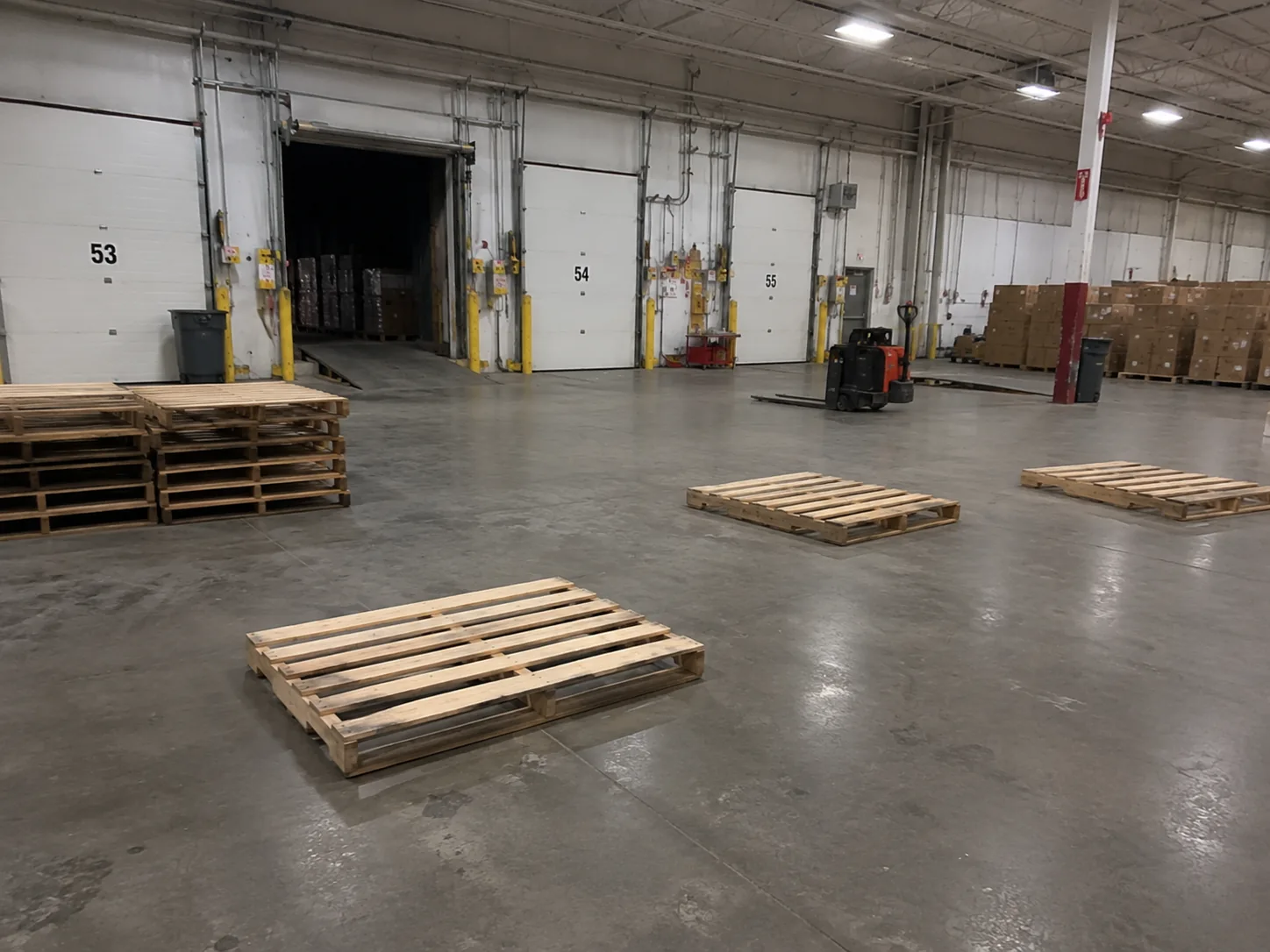
- Arrival. The truck at the gate or the dock door, with a time stamp.
- Dock assignment. Which door, when. (Or: how long the truck waited before being assigned a door.)
- Load or unload start and end. The actual operation window.
- Departure. Truck pulling away, time-stamped.
Without those four data points, the conversation collapses into "your driver was here too long" / "no he wasn't" — and the bill becomes a negotiation rather than a claim.
The thing detention claims share with freight damage claims is that >50% denial rate isn't really about the merit of the claim. It's about the evidence packet. (We unpacked the parallel for damage claims in Why More Than Half of Freight Claims Get Denied.)
The dwell baseline
Some context for how big the operational window actually is.
ATRI's same study found that average dwell at customer facilities runs 1 hour 38 minutes per stop in 2024 — only 22 minutes below the industry-standard "excessive detention" threshold of 2 hours. (Trade-press summary: Trucking Info.)
In practical terms: most shipper and consignee facilities are running operationally close enough to the detention line that any documentation gap is a meaningful financial exposure. The question isn't whether detention happens — it's whether you can prove what happened when it did.
Two angles, same fix
The fix looks slightly different depending on which side of the bill you're on.
If you're a shipper or consignee being billed for detention
Most invalid detention bills don't come from malice. They come from the carrier billing whatever their dispatcher logged, with no way to verify against your dock's actual operation.
Defense looks like:
- Time-stamped arrival photo of the truck (trailer in frame, plate readable).
- Time-stamped photo when the load/unload operation started — pallets being staged, first pallet in or out.
- Time-stamped photo at completion — trailer empty/full, doors closing.
- Time-stamped departure photo if available.
Together these establish a timeline that either confirms the carrier's bill or contradicts it. Either way, the conversation moves from "your driver said he was here X hours" to "here are the photos with timestamps."
If you're the carrier billing for detention
Same evidence, opposite use. Time-stamped photos at arrival and departure are the difference between a bill that gets paid in 30 days and a bill that sits in dispute for six months and eventually gets written off.
The reason fewer than half of detention invoices get paid isn't because shippers are stiffing carriers. It's because the carrier's evidence packet — driver-logged times, no photos, sometimes no GPS — doesn't survive a basic pushback. When the bill arrives with photos, the conversation usually ends.
What this looks like on the ground
Practically, every truck arriving or departing should generate four photos: trailer at arrival, dock at assignment, operation start/end, trailer at departure. None of those need to be carefully composed — they need to be time-stamped and searchable by shipment reference.
That's the whole job. The tooling problem is making sure the photos don't evaporate in someone's camera roll. (For the longer-form argument on that workflow, see Stop Emailing Warehouse Photos.)
How DockSnap fits
DockSnap was built around exactly this kind of dock-side capture. Open the app, tap Ship or Receive, take the photos, tag by barcode or reference, done. Each photo lands in the central library with timestamp, user, and shipment reference attached.
When detention is on the line, the relevant evidence is already there — sortable by date, by reference, by carrier. The photographs are the easy part; the missing piece, until now, has been the destination.
Where to start
If your operation is shipping or receiving more than a few trucks a day, your detention exposure — billed or absorbed — is almost certainly larger than you've sized it. The math we walked through in The Real Cost of a Missing Photo puts a typical mid-market 3PL's detention recovery gap at $25,000–$50,000 per year, on conservative assumptions.
Same fix as everywhere else in the documentation playbook: photograph the four moments, tag by reference, store centrally. Get DockSnap running — same-day setup, no hardware, no commitment.