Stop Emailing Warehouse Photos to Head Office

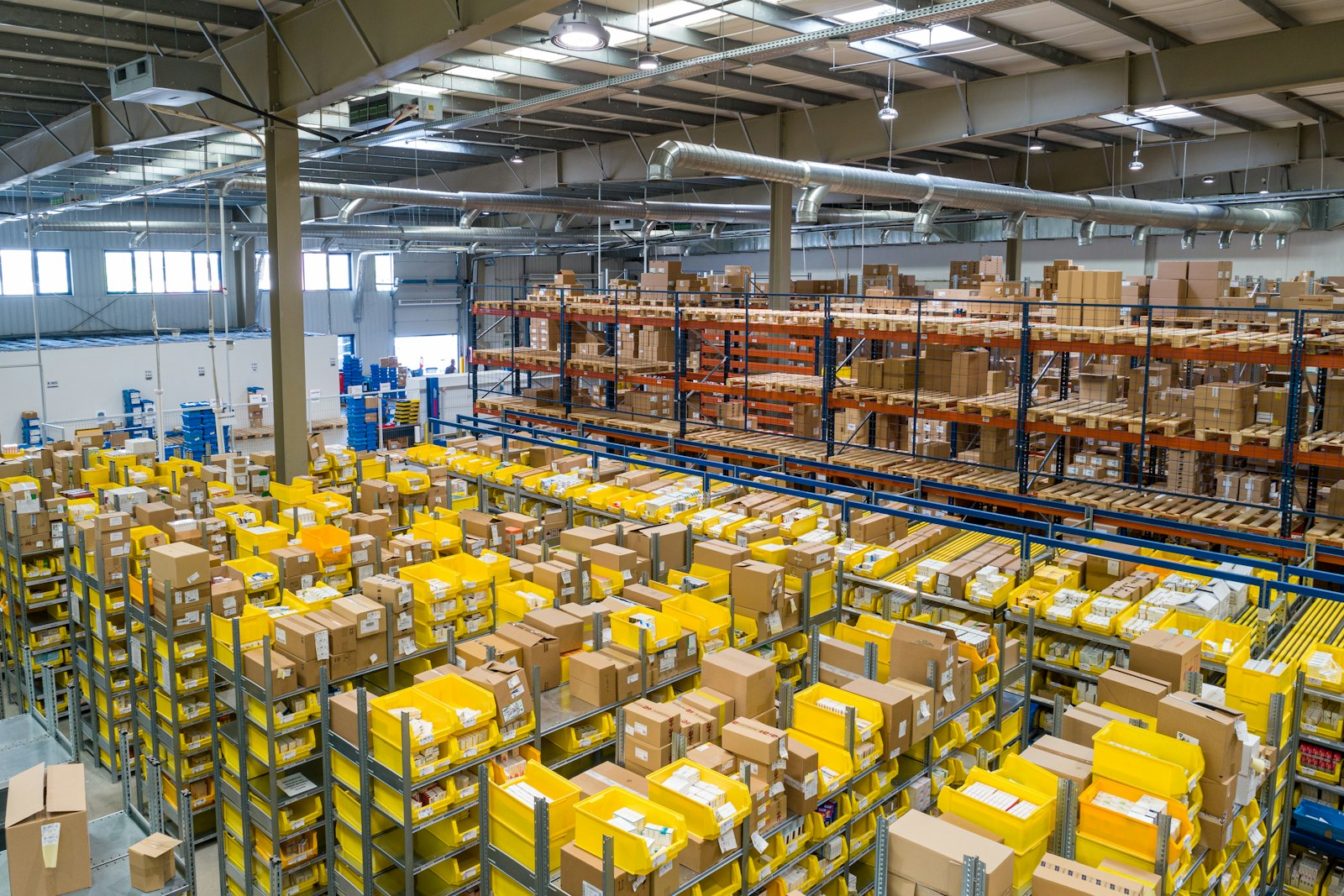
Almost every warehouse we walk into has the same de facto photo workflow:
Operator takes a photo. Operator emails or texts the photo to someone at head office. Someone at head office downloads, renames, and files it manually. If they get to it.
It works — barely. Until it doesn't.
This article is about the cost of that workflow. Not the dramatic cost (a lost claim, a furious customer), but the boring, daily, compounding cost most operations never bother to add up.
The hidden time tax
Pick any operator on your dock. Watch what happens after they take a photo of a damaged pallet.
- Open camera roll. 5–10 seconds.
- Find the right photo (or photos — there are usually three). 10–20 seconds.
- Compose a text or email. 30–60 seconds, including typing the reference and the customer name.
- Send. 5 seconds.
- Forget about it. Zero seconds — but introduces a future problem.
Now multiply: 30 shipments a day × 4 operators × ~4 minutes of phone time per shipment = roughly eight hours a day of dock-floor labour going into the act of sending photos. Per warehouse.
That's before we get to the head-office side, where someone is downloading and filing.
The hidden filing tax
Whoever sits at head office and processes incoming photos is doing one of two things:
- Filing them properly. Renaming files to include the reference number, dropping them in a customer folder, sometimes copying them into the WMS. Three to five minutes per shipment.
- Not filing them at all. Leaving them in the email thread, telling themselves they'll get to it later. (They won't.)
Option 1 is expensive. Option 2 is dangerous — because the photos are functionally lost the moment the email is more than a week old.
Most warehouses do a mix of the two: high-priority customers get option 1, everyone else gets option 2. Which is fine until the dispute comes from a "low priority" customer.
The hidden retrieval tax
This is the cost most operators don't see until it bites: the time to find a photo three weeks, three months, or three years later.
A claim arrives. The customer wants proof. Now someone — usually a senior operator or a manager — is:
- Searching their inbox for the original email.
- Pulling up the operator's text thread.
- Asking the operator if they remember the load.
- Hoping the operator still works there.
- Hoping the photos haven't been deleted by an iCloud cleanup, a phone reset, or a job change.
A 5-minute response window becomes an afternoon. Sometimes the photos genuinely cannot be found.
This is the tax that converts directly into lost claims and customer trust.
What changes with a central library
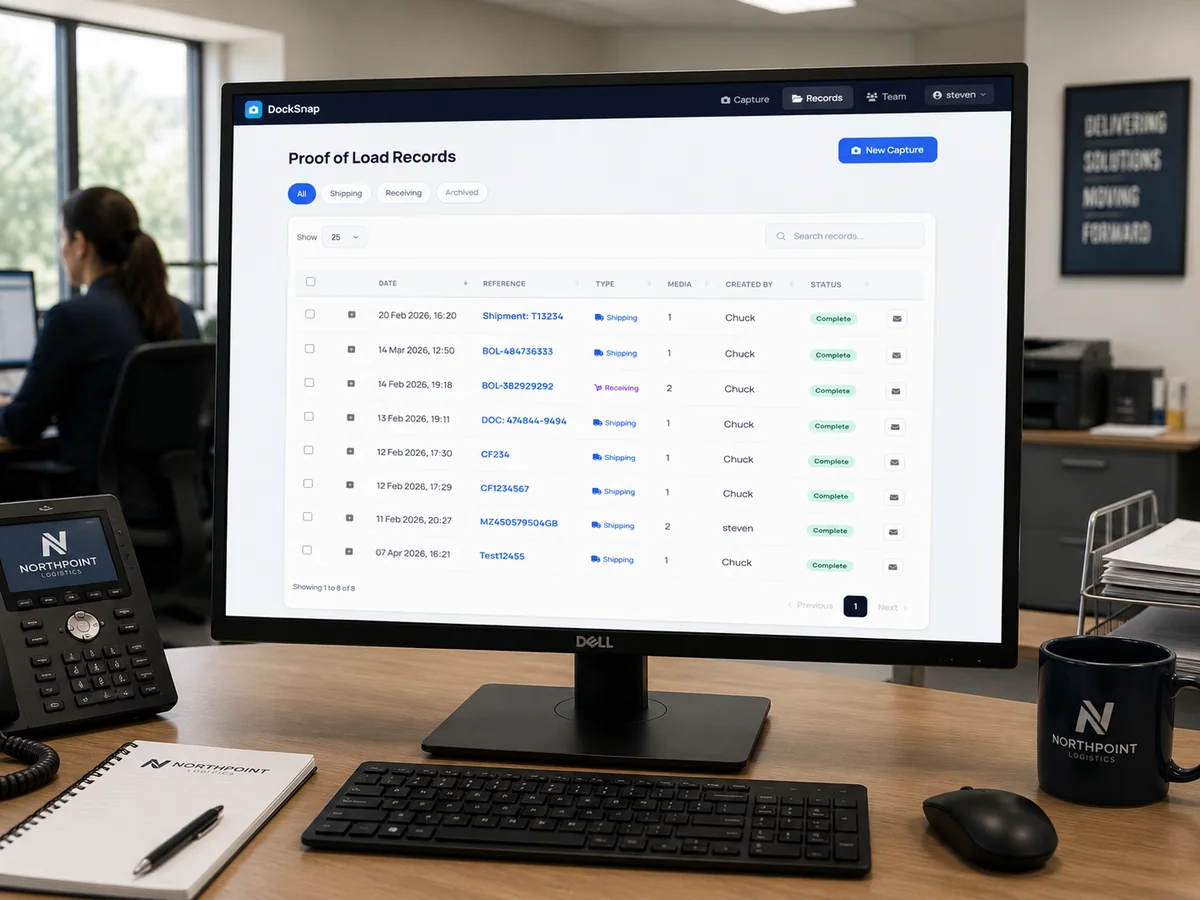
When DockSnap is in place, the workflow looks like this:
- Operator takes the photo inside the DockSnap app.
- Tags it with a reference (manual, barcode, or OCR — see Barcode, OCR, or Just Type It).
- Done.
That's it. The photo is in the central library, organised by date and reference, before the operator has put their phone back in the holster.
No emailing. No filing. No retrieval scramble. No "let me check with Tom — he loaded it."
The cost the industry has actually measured
Time taxes are real, but they're the smaller half of the story. The bigger half is what happens when the photos can't be produced at all.
CSA Transportation reports that more than half of all freight claims are denied for "lack of proof or improper notation at delivery." That's not a soft "your evidence wasn't great" — that's a hard "we won't pay because the documentation isn't there."
ATRI's 2024 detention study shows the same pattern from the other end: 94.5% of fleets bill detention, but fewer than half of those invoices get paid — almost entirely because there's no time-stamped record of what happened at the dock.
If your team ships to retailers, the chargeback math works the same way. SupplierWiki reports that brands with systematic documentation dispute 40–60% of chargebacks; brands without documentation dispute fewer than 10%.
The pattern is identical across all three: same dispute, different outcome, depending on whether the documentation survived to the moment it mattered. That's the workflow this article is really about — the emails that vanish, the camera rolls that get reset, the photos that "are around here somewhere." It has a measurable cost.
DockSnap is $500/month plus $10/user/month. For a 4-user dock, that's $540/month — small compared to even one denied claim or one chargeback that should have been disputed. (We walked through the full P&L for a mid-market 3PL here.)
What to do now
Two paths:
- Audit your current photo workflow. Take an honest look at how much time goes into emailing, filing, and retrieving. Most operations are surprised.
- Try the alternative. Get DockSnap running — same-day setup, no hardware, no commitment. Worst case, you've burned an hour and you've documented today's shipments.
The photos already exist. They're already getting taken. The question is whether you want to keep paying to send them around, or stop.